Mary Robinson Blair

by Renee Sachi Bertol Yu

With plenty of up and coming artist gaining recognition I feel that it is equally as important to remember past designers and artist who have made an impact in our society today. I have personally always been inspired by fairytale books and animated movies, Alice in Wonderland was one of my favourite movies to watch as a small child, and it continues to show and reflect in my work. However, it was not until recently that I discovered the mastermind behind the art works and designs of my favourite movie – Mary Robinson Blair.

After over half a century, American artist, animator, and designer, Mary Blair is finally getting the global recognition that she was denied during a lifetime of personal tragedy and despair. It’s been almost four decades after Mary’s death she is now receiving international acclaim for her work as the principal concept artist and colour stylist on Disney classics; Cinderella, Alice in Wonderland and, Peter Pan, along with her design work on several three-dimensional Disney exhibitions, most notably “It’s a Small World.” Blair passed in 1978, however it was only 1991 when she got inducted into the group of Disney Legends – The Disney Legends Awards is a hall of fame program that recognises individuals who have made an extraordinary and integral contribution to The Walt Disney Company. However I didn’t write this with the intention of depressing you by dwelling on and on about how unfair society was especially back in her time and all the horrible things she had to go through, instead I want this post to celebrate and remember Blair for all her wonderful contributions to our fairytales and many of our childhoods.
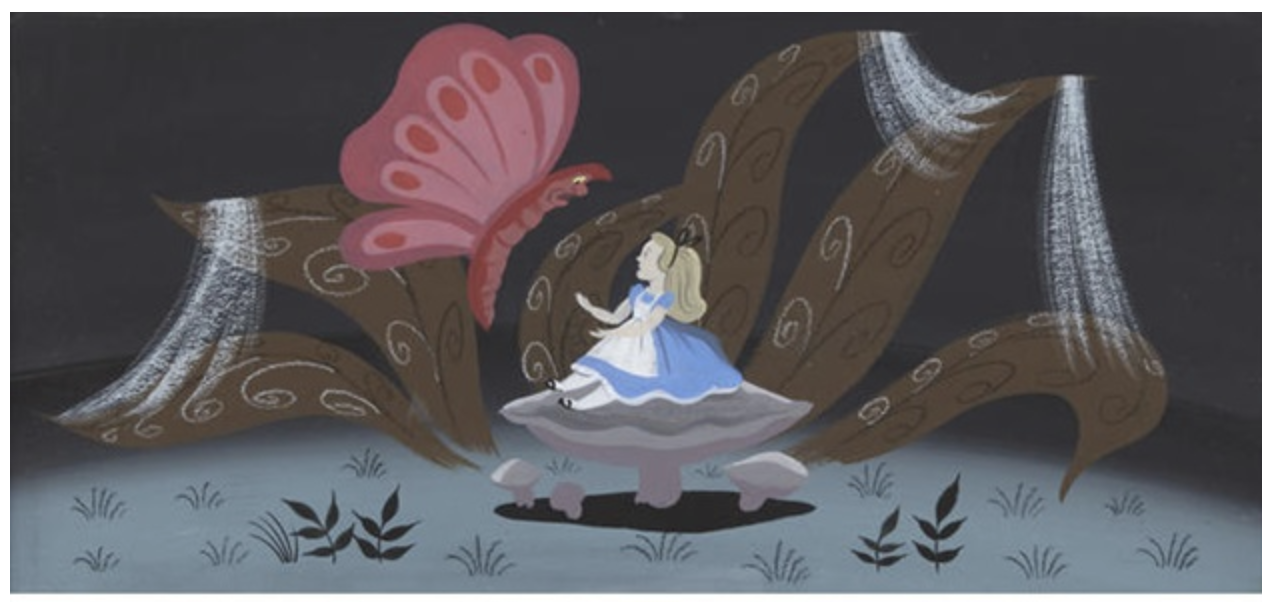
Alice in Wonderland Concept Art (1951) by Mary Robinson Blair

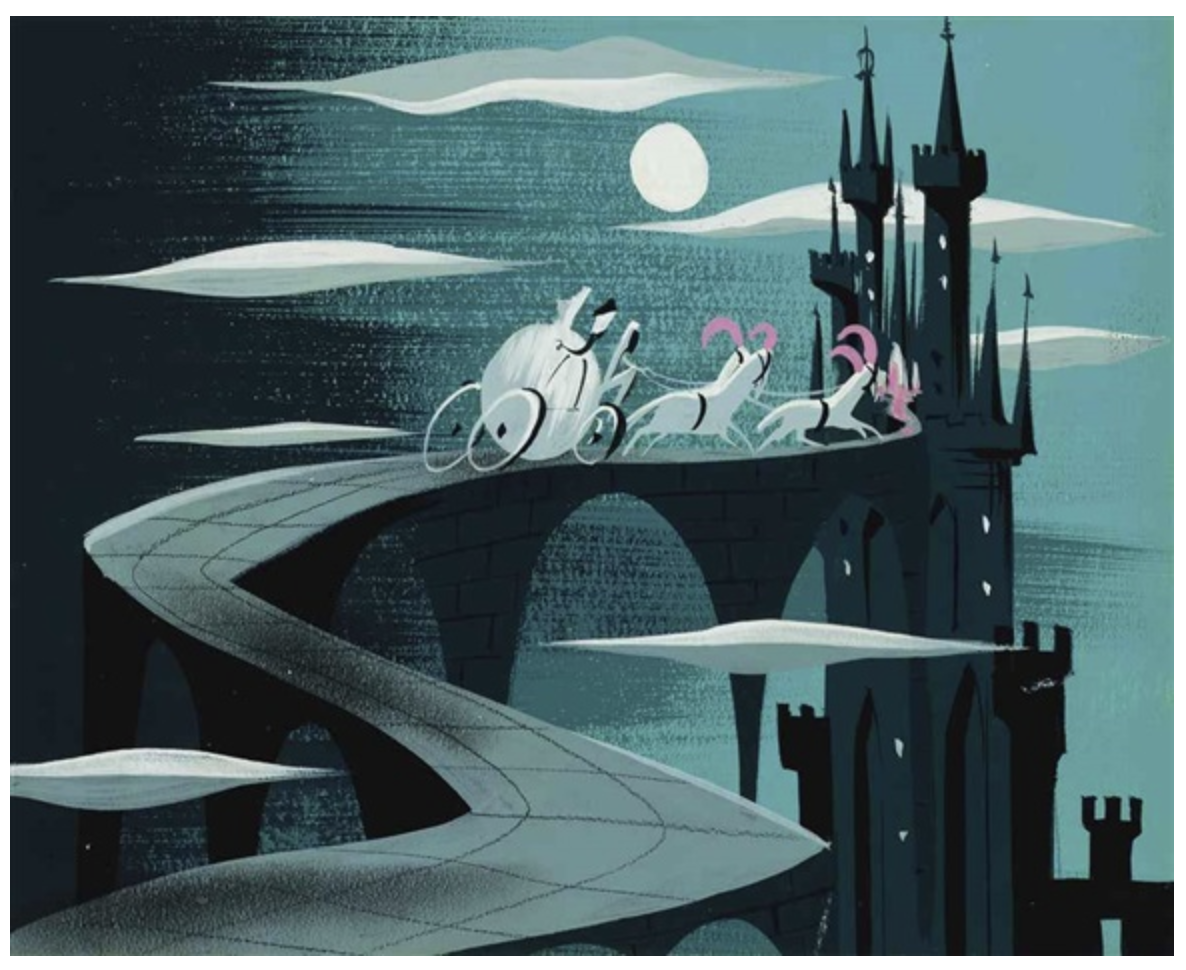
Cinderella’s coach rushing to the castle (1950) by Mary Robinson Blair

Peterpan Concept Art (1953) by Mary Robinson Blair

Blair often worked with watercolours and tempera paints for her concept arts – some of which are still being auctioned around the world today. Before she worked for Walt Disney, Mary Blair began her lifelong multifaceted art career in the 1930’s as a member of the prestigious California Watercolor Society.

Backyards (1930) by Mary Robinson Blair

She was almost in her 40’s when she recognised and began to work for Walt Disney. In 1941 her passionate “explosion of colour” style began to emerge during the Disney Studios “South American Goodwill Tour”. For the next 30 years she continued to create works of art for Walt Disney, developing her own colourful and exciting style. You can definitely similarities between her work for Disney and her more personal work.

Violetta (1970) byMary Robinson Blair

This one for example shares a very similar colour palette to the one used in Alice in Wonderland, especially the scenes that involved Cheshire the cat, besides that the painting also has multiple cats, stripes, frills and mirrors which as also very symbolic in the movie.
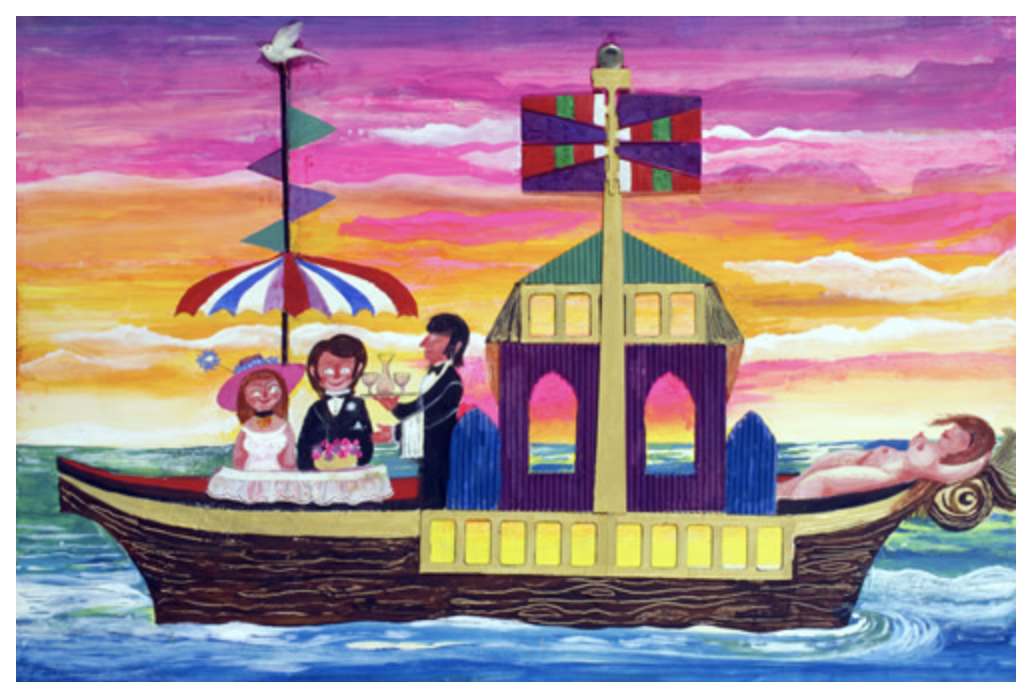
Fantisea (1970) by Mary Robinson Blair

As she got older, Blair explored different textures, and as her fun and vibrant style began to develop through her art we got to see a teasing and sometimes absurd side of her, unfortunately she passed away before she was given the recognition she deserved. I hope she continues to inspire plenty around the world.

Reference and Image Sources:

Soquel Artist Mary Blair Finally Gets Her Due, Geoffrey Dunn (2014) https://www.santacruz.com/news/soquel-artist-mary-blair-finally-gets-her-due.html

ArtNet, http://www.artnet.com/artists/mary-robinson-blair/

Mary Blair Gallery, http://magicofmaryblair.com/mary-gallery.html

Bark to Neon: Indigenous Art from the NGV Collection

By Renee Sachi Bertol Yu

We are starting to see more and more Indigenous Art and Design appropriated into our everyday lives. In the National Gallery of Victoria until the 14th of July is the “From Bark to Neon: Indigenous Art from the NGV Collection” which features artists such as Paddy Compass Namadbara, Clifford Possum Tjapaltjarri, Rover Thomas, Trevor Nickolls, Lin Onus, Emily Kam Kngwarray, Sally Gabori, Brook Andrew and Destiny Deacon who have have shaped and transformed the face of Indigenous art in Australia and inspired many artists to follow in their example.T

Today I had the pleasure of visiting the exhibition and I can easily say that it has very much exceeded my expectations. It was a rather quiet afternoon and there were only about six to nine people in the exhibition while I was there. 

Looking in from outside you could see little bits of warm pink light filling the atmosphere, perhaps from the neon pieces, and it definitely set a very modern and almost romantic atmosphere. Upon entering, I immediately took notice of all the bold and vibrant colours around me.

Smile, 2017, by Destiny Deacon

Smile, 2017, by Destiny Deacon was one of the first few pieces that caught my attention as it’s not like most other indigenous art pieces I have seen in the past in a sense that it makes use of a bright yellow colour and also photography as its chosen medium rather than traditionally used colours and mediums.

Anwerlarr anganenty (Big yam Dreaming), 1995, by Emily Kame Kngwarreye

Then, Anwerlarr anganenty (Big yam Dreaming), 1995, by Emily Kame Kngwarreye filled my eyes as I approach the massive 291.1 x 801.8 cm painting. These art works definitely had me curious about what was ahead.

Regalia, 2013, by Reko Rennie

I entered a dark little corner, lit up by bright neon pieces like Regalia, 2013, by Reko Rennie. Next to these pieces seemed like more tradition pieces of art and it was rather interesting to see them side by side as they were both so different yet they share the same culture and perhaps some similar ideas.

Big Pintupi Dreaming ceremony, 1972, by Anatjari Tjakamarra

As I continued through the exhibition more familiar and traditional pieces made from acrylic paint dotting on canvas were presented such as the Big Pintupi Dreaming ceremony, 1972, by Anatjari Tjakamarra.

When I think of indigenous art, earthy, warm, and neutral colours accompanied by abstract patterns with organic forms usually come to mind, however this exhibition definitely took me by surprise it believe that it has done a great job of incorporating both modern and traditional art. I understand that discussing aboriginals in Australia is still a rather sensitive topic however as I learn more about them especially with the help of art, It has made me more eager to learn and potentially understand their culture and as someone who practices design, contemporary indigenous artist have definitely inspired me to be more bold and expressive with my work. I hope to see more exhibitions like this in the near future. I definitely recommend going to see Bark to Neon at the NGV while you still can!

Reference and Image Sources:

NGV Melbourne, (2019)
https://www.ngv.vic.gov.au/exhibition/from-bark-to-neon/