To Be Heard

By Joshua Fong

As a designer, I am constantly looking for new ways to incorporate my own sense of identity into my work. Currently, I have experimented with a broad range of different methods, including digital 2d prints, animations, illustrations and even a bit of physical print making. It is evident that there was a time where I was unsure of my identity, not just as a designer, but as a person, which reflected in the way in which I produced work. The passion and the expression of projects I’d completed had been stunted by a severe lack of certainty in myself. I have since overcome my troubles, and have found a renewed perspective on my outlook of life and my work as well. 
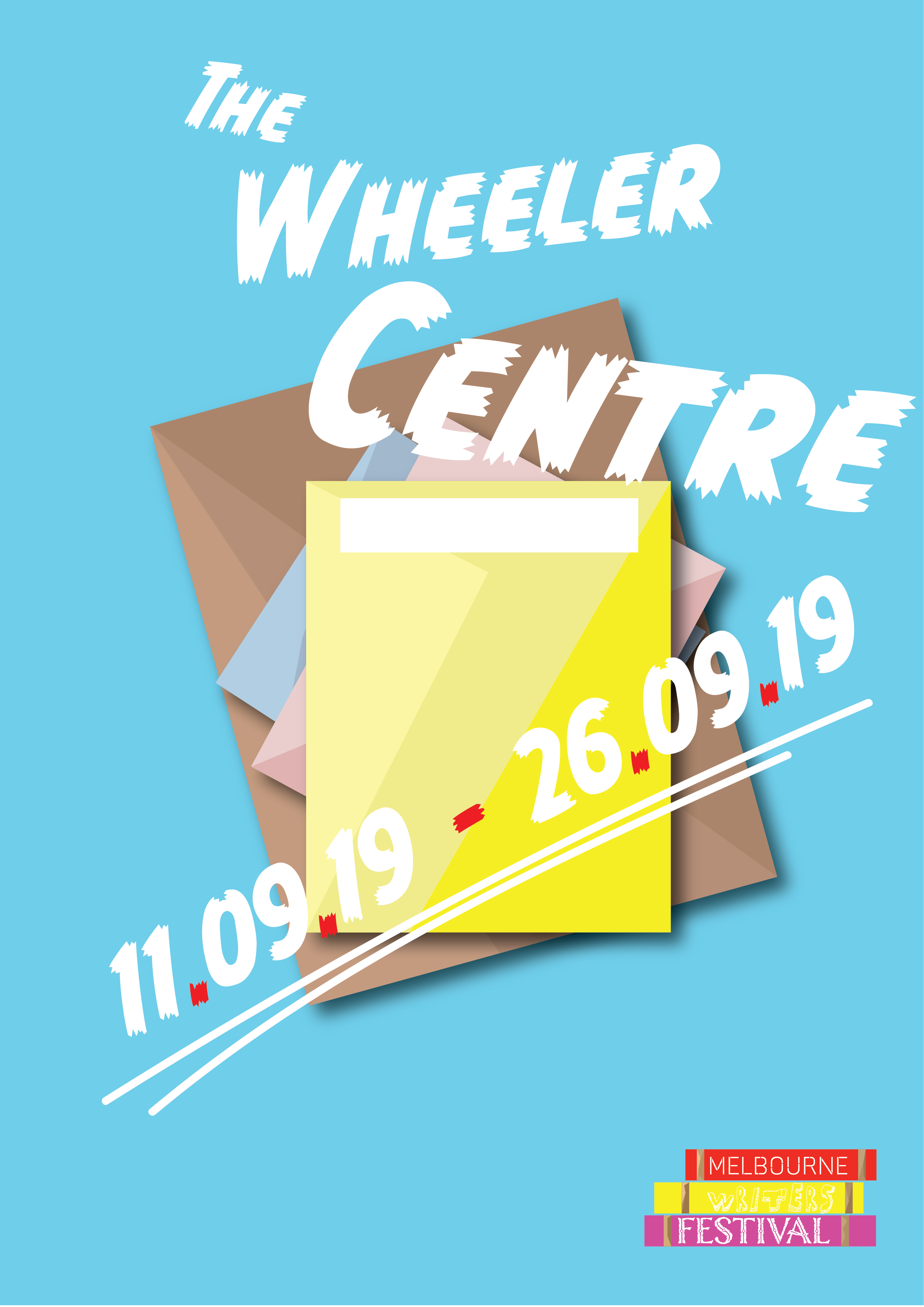
Melbourne Writers Festival Poster – Joshua Fong – 2018

I have decided to focus on abstract design, things that are reminiscent of experiences crucial to my identity, whether they revolve around my hobbies or my culture. In doing so, the work I produce may have a dual meaning, one may be that a project revolves around plants, but at heart the production of it is the animation or the foliage in the design. This no doubt pushes me to create work beyond my comfort zone and promotes the exploration of different materials, methods and media. It is further noticeable that as a designer, I have taken little to no inspiration from others in the same field, which has its own drawbacks and positives. A significant negative of this is that there is a lack of inspiration in learning different skills and techniques that other designers have accumulated. On another note however, the positives of this lack of exposure has allowed myself to innovate with a sense of originality and personalisation. 

In comparison to this, I draw upon a specific reference to the Earthworks poster collective. During the 1970’s many aspiring designers sought to create their own personalised works. Through means of technical experimentation, the artists and designers would operate the way in which they saw fit, resulting in an influx of political and philosophical promotions (Berry, 2010). Operating from under a tin shed, the freedom in which they sought to express their ideals and beliefs resonates with how the design industry may be seen today. All designers seek to project their interpretations of different aspects of life, with many producing bold works that may be radical or anti-society. Like the Australian members of Earthworks, many of us have become emboldened to create that which challenges the preconceptions of societal standards. It is notable that many posters from the Earthworks Poster collective embodied political views such as the denouncement of nuclear power or the promotion of rights for Indigenous Australians (Earthworks, 1979)

I am no exception to the example laid out by designers that have come before. This is seen through designer Stefan Sagmeister, who gained notoriety during the 90s through acts of self-harm in the name of design, challenging viewers to revaluate whether the mind can be trained to be happy (Mcdonald, 2012). Other works of his include Though the method of design is different, the principle will remain the same. A comparison between all designers would yield the fact that we are all striving to create something that voices our own opinions and sense of self. In comparison, my work is comprised mainly of graphics and illustrations, littered with only a few animations. However, Sagmeister’s portfolio, though comprised of graphics, illustrations and animations seems to expand further into different methods. This not only emphasises the skill and techniques that Sagmeister has accumulated over the years as a designer, but also highlights his drive to experiment with different methods. It is evident that this reinforces my belief that design is limitless in its creativity, and there is still much to learn. 

References

Berry, Jess. “Earthworks and Beyond.” Alternative Practices in Design: The Collective-Past, Present & Future: Symposium Proceedings 2010. RMIT University. Design Research Institute, 2010.

Museum of Applied Arts & Sciences. “Poster, ‘Dance Black Lace’, printed by Earthworks Poster Collective”. Museum of Applied Arts & Sciences, Australia. Retrieved 4 November 2017. Created 1972-1979.

Stephanie McDonald, IN PROFILE: Stefan Sagmeister explores happiness through design, 2012

From Bark to Neon: Glowing with Success

by Joshua Fong

‘From Bark to Neon’, which is currently exhibiting at the NGV portion of the Ian Potter Museum, is an exemplary display of indigenous Australian culture and how it has transitioned into the modern day. Contributed largely by Deakin University, the collection of works was composed to inspire young artists and to insight people to appreciate the diversity of aboriginal works. Glad to say that this was seen through the techniques and processes that I witnessed during my visit, which seemed to emphasise the process of generations of culture converging into one. It is evident that the overall message of the collection is well felt, this being attributed primarily by the works followed by the variety of the pieces. Henceforth, despite the exhibition’s attempt to communicate to children, the pieces and their inner meanings are better grasped by adults. This aspect is no doubt due to the lack of interactivity, and though an awe-inspiring soundtrack is applied in the background, the only method of enjoying the exhibit is by reading and looking. This however, did not hinder my enjoyment of the exhibition, as each item present was intricate and well-crafted evoking a sense of greater purpose and diversity.

The most prominent aspect of the exhibition, was the entirety of the collection and the way in which it unfolded around me. Numerous depictions of wildlife, landscapes and spiritual entities, all from various aboriginal artists, spoke of individuality and of appreciation. An example of this being Nora Wompi’s and Bugai Whylouter’s work ‘Kunawarritiji’, which, using polymer paint depicts ancestral beings dancing across the night sky (Wompi and Whylouter, 2009). Though only a set of three portrait paintings, this highlight of the museum seemed to resonate with the rest of the works around it. Contrasting this display and isolated in a different segment was an assortment of experimental works. From neon typography made by Brook Andrew to three dimensional sculptures, this section of the museum challenged the preconceptions of what may be considered as art. Ultimately, the contents of this spectacle demonstrate the strength and integrity of Aboriginal art, and how culture and traditions can be preserved and made new. Each work abides by the Australian Indigenous Design Charter, utilising specific references to different aboriginal communities and promotes the exploration of diversity within indigenous art (Kennedy and Kelly, 2017). Specifically, Nora Wompi and Bugai Whylouter’s art ‘Kunawarritiji’ is a proper example of this representation, as it embodies cultural respect and identifies the key aspects of their artists’ heritage. The use of synthetic polymer paints help to create a spiralling rich portrait of prominent oranges and rouge details that help sell its authenticity (Wompi and Whylouter, 2009). 

‘Kunawarritiji’ by Nora Wompi and Bugaiu Whylouter, 2009

Another key aspect to the enjoyment of this display was the space that the exhibition occupies, and the method from which the transition into more contemporary and modern media has been accomplished. The exhibit is split into three separate sections, each embodying different aspects of aboriginal art. Others witnessing the exhibit were funnelled through a linear path, one that took them on a journey through advancing diversification. Paintings that appeal to the traditional means of art lay at the front and back of the exhibit, whilst the neon typographical elements remained in the centre. Ultimately, this has helped to tell a story of progression throughout Aboriginal culture and emphasises the authenticity of such works whilst abiding to the Australian Indigenous Design Charter (Kennedy and Kelly, 2017).

This exhibition was a joy to witness, the creations of each artist spoke of heart and authenticity, showing the utmost respect for indigenous culture. Furthermore, the setup of the art creates a narrative that invites audiences to explore the history of indigenous culture and how it has progressed into this modern age. Ultimately, though the collection is unsuccessful at being family friendly, this is no less than a splendid exhibit.

References

Nora Wompi, Bugai Whylouter, Kunawarritiji, 2009

Russell Kennedy & Meghan Kelly (2017) The Australian indigenous design charter: communication design. The development of a guide for respectful professional practice, Communication Design.